
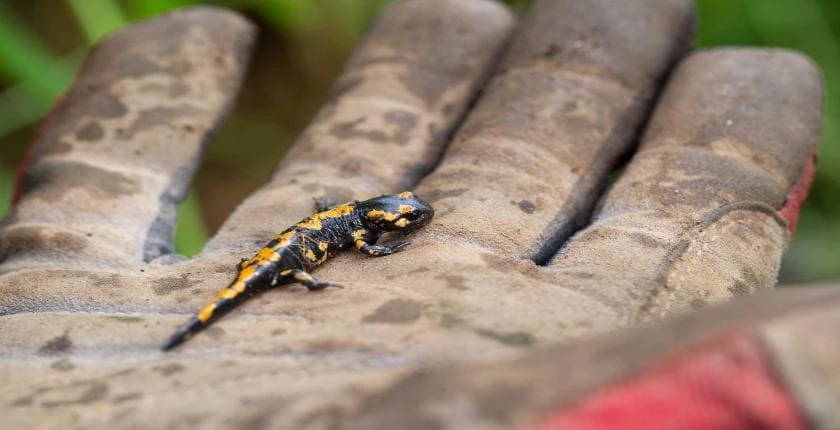
Great Crested Newt Surveys
Get in touchAcorn Ecology provides Great Crested Newt Surveys for residential, commercial and infrastructure developments. The company helps developers, landowners and planning professionals identify great crested newts, meet ecological planning requirements and reduce delays through reliable survey work.
What Is Great Crested Newt Surveys?
Great Crested Newt Surveys assess ponds and surrounding terrestrial habitats to determine whether great crested newts are present and whether development could affect this protected species. Acorn Ecology carries out surveys to provide evidence for planning applications and ecological assessments.
Surveys may include habitat suitability assessments, presence or absence surveys and population assessments where required. Findings help inform mitigation strategies and planning decisions.
What Types of Great Crested Newt Surveys Are Available?
Great Crested Newt Surveys include different survey methods depending on the site's characteristics and planning requirements. Acorn Ecology recommends the appropriate approach following an initial site review.
Habitat Suitability Index (HSI) Assessment – Evaluates ponds for their potential to support great crested newts.
Presence or Absence Survey – Determines whether great crested newts are using a pond.
Population Assessment Survey – Estimates population size where required for planning.
Environmental DNA (eDNA) Survey – Detects great crested newt DNA from pond water samples where suitable.
Terrestrial Habitat Assessment – Reviews surrounding habitats used for sheltering and foraging.
When Is Great Crested Newt Surveys Needed?
Great Crested Newt Surveys are required where development may affect ponds or terrestrial habitats that could support this protected species. Acorn Ecology completes surveys before planning decisions where ecological information is requested.
Typical situations include:
Residential developments.
Commercial construction projects.
Road and infrastructure schemes.
Land redevelopment.
Quarry and mineral extraction.
Utility installations near ponds or suitable habitats.
How Does Great Crested Newt Surveys Work?
Great Crested Newt Surveys follow recognised ecological survey methods. Acorn Ecology plans surveys around seasonal survey windows, with fieldwork often taking between 2 and 6 visits depending on survey requirements.
Assess the site and nearby ponds.
Complete a Habitat Suitability Index assessment where appropriate.
Undertake survey visits using approved ecological methods or eDNA sampling.
Record survey findings and assess ecological impacts.
Produce a report with recommendations for planning and mitigation where required.
Who Needs Great Crested Newt Surveys?
Great Crested Newt Surveys support projects across multiple sectors where protected species may be affected. Acorn Ecology provides surveys for clients needing ecological information before development begins.
Typical clients include:
Homeowners.
Property developers.
Planning consultants.
Architects.
Civil engineering contractors.
Local authorities.
Utility companies.
Landowners and estate managers.
How Much Does Great Crested Newt Surveys Cost?
Great Crested Newt Surveys typically cost from around £400 to £2,500+, depending on the number of ponds, survey visits and site complexity. Acorn Ecology provides tailored quotations after reviewing each project.
Typical cost ranges include:
Habitat Suitability Assessment: approximately £400–£700.
eDNA Survey: typically £500–£900 per pond.
Presence or Absence Surveys: generally £900–£2,500+ depending on the number of required visits.
Costs vary according to pond numbers, access, survey timing and planning requirements.
What Are the Benefits of Great Crested Newt Surveys?
Great Crested Newt Surveys provide reliable ecological evidence before development proceeds. Acorn Ecology helps identify protected species constraints early, allowing projects to progress with appropriate ecological planning.
Benefits include:
Supports planning applications with ecological evidence.
Identifies protected species at an early stage.
Reduces the risk of planning delays.
Helps inform mitigation strategies where necessary.
Supports biodiversity conservation.
Assists with legal compliance during development.
What Regulations Apply to Great Crested Newt Surveys?
Great Crested Newt Surveys help support compliance with UK legislation protecting great crested newts and their habitats. Acorn Ecology prepares ecological reports that can assist planning authorities during development assessments.
Relevant legislation and guidance may include:
Wildlife and Countryside Act 1981 (as amended).
Conservation of Habitats and Species Regulations 2017.
Planning policies relating to biodiversity and protected species.
Guidance published by Natural England and the Chartered Institute of Ecology and Environmental Management (CIEEM).
Great Crested Newt Surveys: Frequently Asked Questions
How much do Great Crested Newt Surveys cost?
Great Crested Newt Surveys generally start from around £400, while larger developments requiring multiple survey visits may exceed £2,500. Costs depend on pond numbers, survey methods and site complexity.
When can Great Crested Newt Surveys be carried out?
Traditional surveys are typically undertaken between mid-March and mid-June, when great crested newts are active in breeding ponds. Environmental DNA surveys are generally completed during the recognised survey season.
How long do Great Crested Newt Surveys take?
Initial habitat assessments may be completed within 1 day, while presence or absence surveys usually require 4 survey visits over several weeks. Larger or more complex sites may require additional ecological work.
Will a Great Crested Newt Survey guarantee planning approval?
No. Great Crested Newt Surveys provide ecological information to support planning decisions but cannot guarantee approval. Survey findings help planning authorities assess ecological impacts and determine appropriate mitigation.
Why are Great Crested Newt Surveys important before development?
Great Crested Newt Surveys identify protected species before construction begins. Completing surveys early helps reduce planning delays, supports legal compliance and allows suitable ecological measures to be incorporated into project designs.
Get a Free Quote for Great Crested Newt Surveys
Acorn Ecology provides professional Great Crested Newt Surveys for planning applications, development projects and land management schemes. Contact the team to discuss your site and receive a tailored quotation based on your project requirements.
Related Great Crested Newt Surveys Services
Great crested newt surveys are frequently identified during a Preliminary Ecological Appraisal where ponds and suitable terrestrial habitats are present.
Habitat mapping completed through a Phase 1 habitat survey helps determine whether further amphibian surveys are required.
Survey findings often contribute towards an Ecological Impact Assessment for planning and development proposals.
Where protected populations are affected, our European Protected Species licensing service supports the legal approval process.
Development projects may also require ecological mitigation method statements (CEMP) to safeguard newts during construction.
Site works can then be monitored through our Ecological Clerk of Works service to ensure licence conditions are followed.